

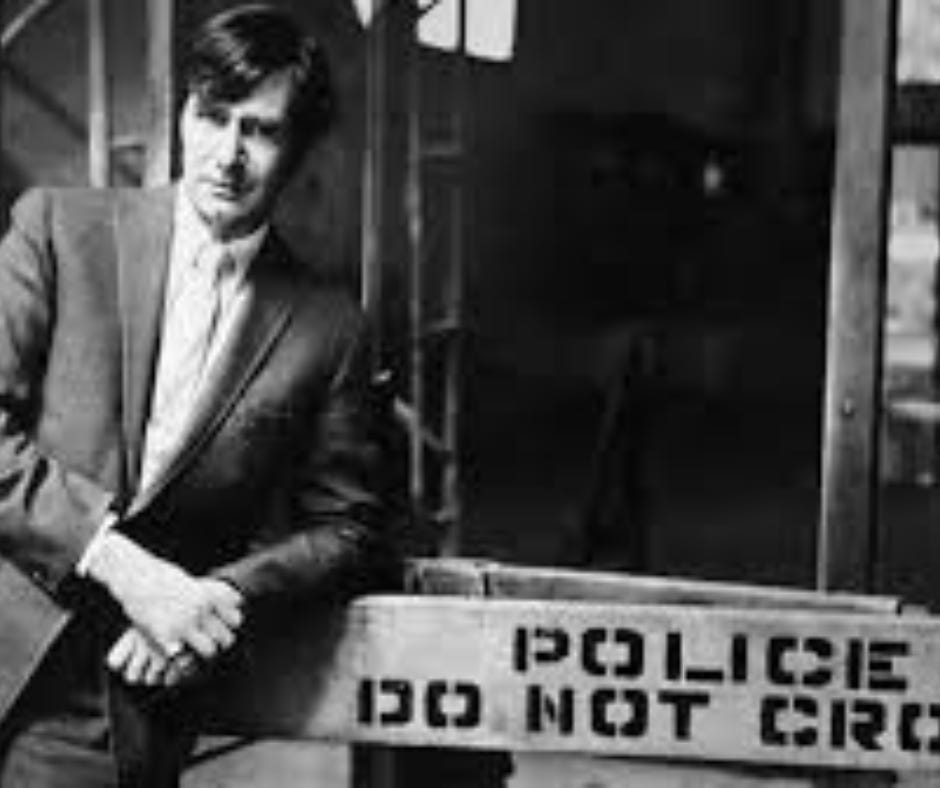
Ed McBain (the pseudonym of Evan Hunter which, in itself, was a legal replacement of the author’s birth name, Salvatore Lombino) launched his 87th Precinct series in 1956 with Cop Hater, and over nearly five decades, he produced 55 novels set in the fictional city of Isola. The metropolis, like Superman’s Metropolis, was an unmistakable stand‑in for New York City. The series follows a rotating cast of detectives at the 87th Precinct, including Steve Carella, Meyer Meyer, and Bert Kling, among others.
Before McBain’s series, most detective stories focused on lone sleuths, private eyes, or amateur detectives. McBain, by contrast, created the modern police procedural. Stories that followed a squad of cops working together, solving crimes through teamwork, routine, and technical realism. He built a world where the methodical grind of police work was central to the plot and not just background. His fictional city had its own geography, politics, and social landscape, mirroring the real New York while maintaining creative independence.
Many of the books in the series were paperbacks, accessible to a mass audience, and consistently popular over the decades. With 55 titles spanning from Cop Hater in 1956 to Fiddlers in 2005, the sheer output and sustained readership speak to the series’ success. While exact sales numbers aren’t readily available for each title, several became bestsellers and the series as a whole gained critical acclaim. McBain’s pulp writing style was lean and dialogue-driven. These book were fast reads but left a lasting impression.
One of the series’ great strengths was its ensemble nature. Steve Carella might have been the heart of the precinct, but each book offered time in the spotlight to other detectives. McBain let characters evolve, relationships shift, and the city itself develop a rich life of its own. The 87th Precinct became less a backdrop and more of a living organism or its own kind of character in the stories. The books reflected the chaos of urban life. Even though characters didn’t age in real time, McBain managed to keep the world contemporary and believable.
The emotional core of the series was often understated but powerful. Cases weren’t just puzzles but were reflections of human behavior, institutional failure, and sometimes moral compromise. McBain knew how to balance crime plot mechanics with social realism. He avoided glorifying violence or romanticizing police work, opting instead to show it as repetitive, demanding, and emotionally taxing. Being a cop was just another stressful job.
In the end, the 87th Precinct series was more than just a successful franchise in that it was a blueprint for a new subgenre. It shaped television police dramas, inspired generations of crime writers, and gave readers a gritty look at the machinery of urban law enforcement. For anyone interested in crime fiction that blends character, craft, and procedural detail, McBain remains essential.
Appreciate the tip on this series. Thank you Phil.
Nice article, big Phil. I'm reading some of his short stories right now.